

Eight Hours a Week: Healthcare’s Hidden Paperwork Problem
Doctors report spending more than eight hours a week on administrative paperwork. That’s a full workday every week spent away from patients. Why is healthcare admin still so broken, and can AI actually fix it?
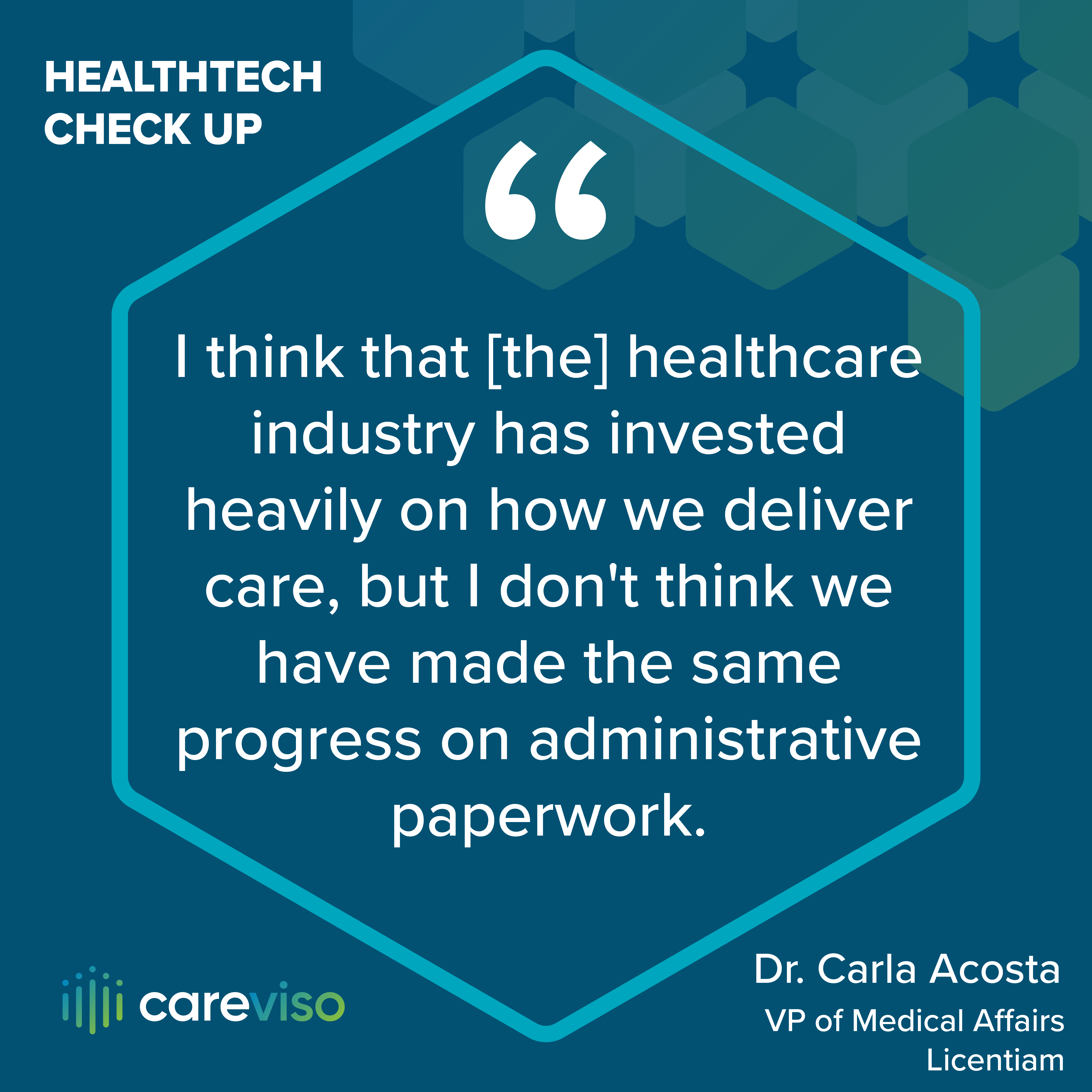
Co-Hosts Rachelle Galant and Perry Dimas are joined by Dr. Carla Acosta, Vice President of Medical Affairs at Licentiam and an internationally trained physician. She explains why healthcare administration is so fragmented, starting with more than 70 medical boards that each have their own rules. She also covers why decades of fixes, from CAQH to the Interstate Medical Licensure Compact, still haven’t removed the redundancy.
In this episode:
- How slow licensing and credentialing can leave a 10-physician practice waiting on $600,000 in revenue
- The state-vs-federal regulatory tangle, and why the IMLC still doesn’t cover all 50 states
- What separates an AI agent from a chatbot, and why human experts still need to check the work
- Who is responsible when AI gets it wrong
- A practical first step for small practices that want to start using AI
- Lightning round: the one metric every operations leader should track, and Dr. Acosta’s five-year fix for physician burnout
- CAQH’s estimate that $20 billion a year could be saved by cutting redundant admin work
The future of healthcare admin isn’t about replacing people. It’s about freeing physicians to do what they trained for: caring for patients.

Discover how seeQer informs patients and transforms practice.
Schedule a seeQer demonstration of benefits verifications, cost assessments, and other essential tasks in the platform. Learn how seeQer can help your organization reduce administrative burden, transform cumbersome processes, and provide transparency that empowers patients in a complex and ever-changing industry.