

Healthcare Automation: Improving Access and Care
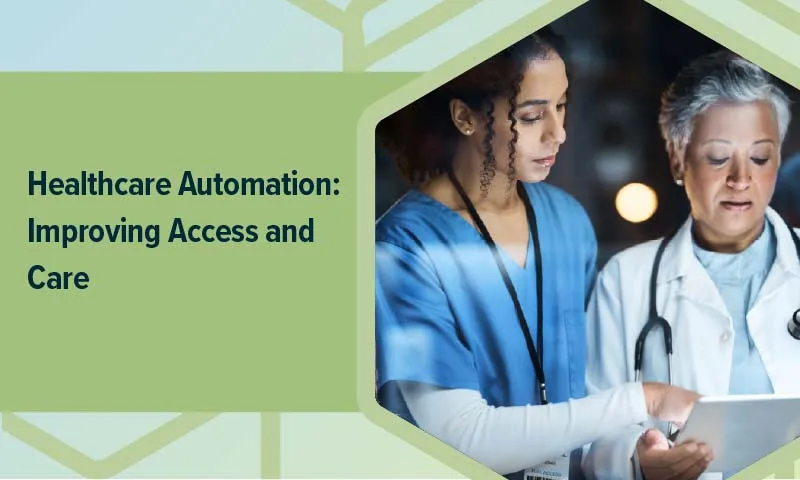
Healthcare automation is transforming how providers, payers, and healthcare institutions manage administrative workflows, clinical operations, and patient access.
As healthcare systems face mounting pressure from staffing shortages, rising costs, and increasing regulatory complexity, automation has become an essential solution for improving efficiency while maintaining quality care.
At its core, healthcare automation uses technology to streamline repetitive and time-intensive processes across the healthcare ecosystem. For example, studies show that automation can cut administrative tasks by up to 45%, allowing clinicians to spend more time on direct patient care rather than paperwork.
When implemented correctly, automation reduces administrative burden, accelerates decision-making, and creates a more transparent, patient-centered experience.
What Is Healthcare Automation?
Healthcare automation refers to the use of digital tools and intelligent systems to perform tasks that traditionally require significant manual effort. These tasks often include:
- Prior authorization and utilization management: Automation identifies services that require authorization, pulls clinical documentation from the EHR, submits requests to payers, and tracks approval status in real time. Rules engines flag missing information early, while automated follow-ups reduce delays and prevent care interruptions.
- Eligibility and benefits verification: Automated systems verify coverage at scheduling and again prior to service, confirm deductibles and patient responsibility, and surface benefit limitations directly in the workflow. This reduces claim denials and improves upfront financial transparency for patients.
- Referral and intake processing: Automation captures referrals electronically, validates required information, routes them to the appropriate department, and initiates intake tasks without manual data entry. Intelligent workflows reduce handoffs and shorten the time from referral to scheduled appointments.
- Medical necessity validation: Clinical automation cross-references payer policies with patient data to confirm medical necessity before services are rendered. When gaps are detected, the system prompts clinicians for additional documentation, reducing downstream denials and rework.
- Patient check-in and front-end access workflows: Digital check-in automates form completion, insurance uploads, and consent collection before the visit. Patient data flows directly into clinical and billing systems, eliminating duplicate entry and reducing wait times at the point of care.
- Automated appointment reminders and scheduling coordination: Automation sends reminders via text, email, or portal notifications, supports rescheduling, and updates calendars in real time. This reduces no-show rates while minimizing staff involvement in routine scheduling tasks.
- Patient portals and document management: Automated portals surface up-to-date records, test results, authorizations, and billing information without manual intervention. Patients can securely access and submit information, improving engagement while reducing inbound administrative inquiries.
- Patient engagement and experience surveys: Automation triggers surveys based on visit completion or care milestones, collects responses, and aggregates insights for reporting. Feedback is routed to the appropriate teams, allowing organizations to act quickly on patient experience trends.
- Revenue cycle management and billing automation: Automated workflows manage charge capture, coding validation, claim submission, and payment posting. Exceptions are flagged for review while clean claims move forward without manual touchpoints, accelerating reimbursement and reducing errors.
- Secure data exchange between providers, payers, and partners: Automation enables standardized, secure data sharing across systems, ensuring that clinical, administrative, and financial information remains synchronized. This supports continuity of care while reducing delays caused by fragmented or outdated data.
Rather than replacing human expertise, healthcare automation supports clinical and administrative teams by handling high-volume, repeatable work through technologies such as artificial intelligence, machine learning, and predictive analytics.
These tools analyze large volumes of data, surface insights in real time, and anticipate next steps across clinical and operational workflows.
As a result, staff can focus on complex cases, patient engagement, and higher-value decision-making, while organizations move toward more proactive, data-driven care delivery.
READ MORE: AI in Prior Authorization: How Technology is Streamlining Access to Care
Why Healthcare Automation Matters Now
The demand for healthcare automation has grown rapidly as organizations contend with:
- Workforce shortages that strain administrative teams
- Increasing process complexity tied to payer variation
- Delays in patient access to care
- Rising denial rates and rework
- Greater expectations for transparency and compliance
Manual workflows, especially those tied to prior authorization and access management, continue to be a significant hurdle for providers, staff, and patients alike. These processes often rely on disconnected systems, manual data entry, and reactive follow-ups, creating delays, limited visibility into case status, and increased administrative strain.
Healthcare automation addresses these challenges by centralizing workflows, enabling real-time visibility into authorization and access activities, and proactively identifying issues before they impact care delivery.
Platforms like seeQer help organizations replace fragmented, manual processes with intelligent automation that tracks requests end to end, surfaces actionable insights, and ensures teams can intervene quickly and confidently, improving both operational efficiency and the patient experience.
The Impact of Healthcare Automation on Access and Operations
Healthcare automation delivers value across the entire care continuum, from improving patient access to strengthening financial and compliance operations. By replacing manual, fragmented processes with intelligent, connected workflows, organizations can reduce delays, improve accuracy, and scale more effectively.
The benefits below highlight how automation drives meaningful impact across key areas of healthcare operations.
Patient Access and Experience
One of the most significant benefits of healthcare automation is faster patient access to care. By reducing delays caused by manual data entry, phone calls, and disconnected systems, automation enables patients to receive approvals, schedule services, and begin treatment more quickly.
Automated workflows also improve communication and transparency, giving patients clearer expectations around next steps, timelines, and coverage, which leads to a more consistent and patient-centered experience.
Operational Efficiency and Productivity
Automation reduces administrative burden by alleviating repetitive, high-volume tasks that traditionally consume staff time. Instead of chasing documentation, re-entering data, or manually tracking case status, teams can rely on automated workflows to move work forward.
This allows clinical and administrative staff to focus on patient support, exception handling, and higher-value activities that require human judgment, improving productivity without increasing headcount.
Revenue Cycle Management
Healthcare automation plays a critical role in strengthening revenue cycle performance. Automated workflows apply standardized rules and payer-specific policies to improve accuracy and consistency across eligibility, authorization, billing, and claims processes.
By reducing errors, avoiding unnecessary denials, and minimizing rework, organizations can accelerate reimbursement and improve financial outcomes.
READ MORE: Innovating and Developing Healthcare Technology: careviso’s Product Team
careviso’s Approach to Healthcare Automation
careviso delivers healthcare automation solutions designed to address the complexity of patient access and prior authorization workflows.
Through the integration of purpose-built technology along with advanced data intelligence and deep operational expertise, careviso supports healthcare organizations in reducing friction across the care continuum while enhancing efficiency, predictability, and transparency.
Rather than relying on generic automation tools, careviso builds healthcare automation solutions tailored to payer-specific policies and provider workflows.
The core of this approach is seeQer, a purpose-built platform that brings real-time transparency and automated case handling to multiple administrative workflows, reducing manual effort, lowering costs, and improving decision confidence.
Key capabilities and outcomes include:
- Automated eligibility and insurance discovery: With seeQer’s Eligibility and Discovery solution, patient coverage is verified quickly and accurately without repetitive phone calls or portal lookups. This reduces administrative burdens while giving providers a comprehensive view of network status and benefits early in the care planning process.
- Real-time patient cost clarity: The Patient Cost Responsibility solution delivers verified out-of-pocket estimates, deductible and copay information, and coverage details before treatment begins. By providing cost information upfront, providers can improve patient satisfaction and reduce billing-related confusion or disputes.
- Prior authorization eligibility detection: Through seeQer’s Prior Authorization Eligibility functionality, the platform automatically identifies whether authorization is required and estimates the likelihood of approval. This removes guesswork from scheduling decisions and helps prevent avoidable delays.
- Automated prior authorization processing: seeQer also supports Prior Authorization Processing by automating submissions and tracking status across payers. This reduces manual follow-ups and shortens authorization timelines while improving visibility for staff.
These solutions integrate seamlessly with provider workflows and adapt to evolving regulatory standards. This approach ensures that automation strengthens operational performance and supports consistent and compliant access to care.
READ MORE: Enhancing the PA Process for Faster, More Accurate Results
Healthcare Automation and the Future of Access
As healthcare continues to evolve, automation will play an increasingly important role in enabling value-based care, improving patient satisfaction, and supporting overextended teams. The future of healthcare automation is focused on empowering humans with better tools and clearer insights rather than removing them from the process.
Healthcare automation is a powerful lever for improving access, efficiency, and transparency across the healthcare system. When implemented strategically, it reduces administrative burden while supporting better outcomes for patients, providers, and partners.

Discover how seeQer informs patients and transforms practice.
Schedule a seeQer demonstration of benefits verifications, cost assessments, and other essential tasks in the platform. Learn how seeQer can help your organization reduce administrative burden, transform cumbersome processes, and provide transparency that empowers patients in a complex and ever-changing industry.