

Annual Reverification: How Automation Is Transforming Patient Access
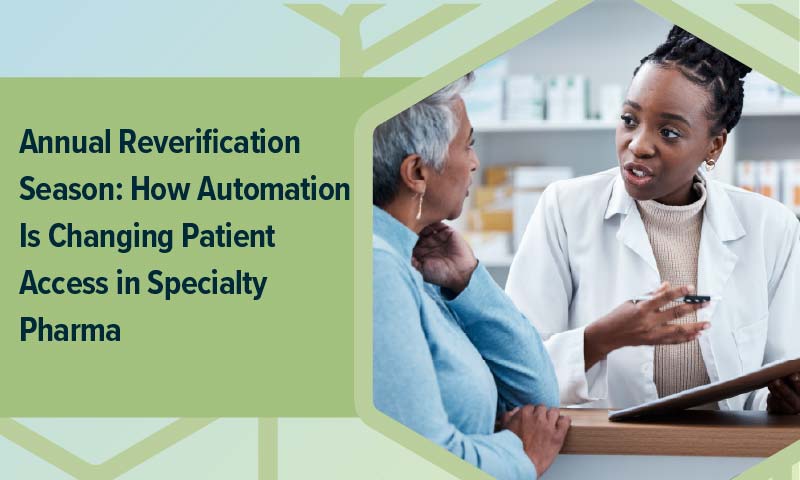
Every year, the beginning of a new plan year brings a familiar challenge for pharmaceutical manufacturers and patient support service providers: annual reverification (AR). As patients transition to new insurance plans, benefit information, coverage requirements, prior authorizations, and out-of-pocket costs can change. For organizations responsible for helping patients access specialty medications, keeping this information current is essential to maintaining continuity of care.
The scale of the challenge is significant. Research published in JAMA Network Open suggests that 15–20% of insured individuals experience coverage disruption or health plan change each year. For patients receiving specialty therapies, even a seemingly routine insurance change can introduce additional administrative requirements and potentially delay access to treatment.
As patient support programs manage increasingly complex reimbursement requirements, automation is becoming an important part of the conversation.
Why Annual Reverification Creates Challenges
Annual reverification involves more than confirming whether a patient still has active insurance coverage. A new plan year can bring changes to formulary placement, medication coverage, patient cost-sharing, prior authorization requirements, and the information needed to obtain approval for treatment. For pharmaceutical manufacturers and their patient support partners, these changes create a substantial administrative workload. Teams must collect updated insurance information, contact payors, review coverage requirements, identify changes to existing authorizations, and communicate next steps to providers and patients.
Much of this work has traditionally relied on manual processes, including phone calls, portal searches, and repetitive data entry. When organizations are managing large patient populations across multiple therapies and payors, these processes can make it difficult to complete reverifications quickly and consistently.
The challenge is particularly pronounced in specialty pharma, where medications often have complex coverage requirements and may fall under either the medical or pharmacy benefit. A simple confirmation of active coverage may not provide enough information to determine what is required for a specific medication or treatment.
The Limitations of Traditional Benefit Verification
Traditional benefit verification can provide a starting point, but confirming active coverage is only one part of understanding a patient's path to treatment.
For specialty medications, manufacturers and patient support teams can benefit from more detailed information about the product, including whether a medication is covered, which benefit applies, what authorization requirements exist, and what costs the patient may be responsible for. These details can vary significantly between payors and individual plans. Even when a patient remains with the same insurance carrier, changes to plan design or coverage policies can affect the requirements for receiving treatment. This makes accuracy especially important during annual reverification. Outdated or incomplete information can lead to additional follow-up, unnecessary administrative work, and potential delays in treatment.
Moving beyond basic benefit verification requires a more comprehensive approach to gathering and interpreting coverage information. It also requires technology capable of handling the complexity of different products, payors, and administrative requirements.
READ MORE: What is Real-Time Benefit Verification?
How Automation Can Improve Annual Reverification
As patient support programs grow and reimbursement requirements become more complex, automation offers an opportunity to improve how organizations manage annual reverification. Rather than relying entirely on manual research, phone calls, and data entry, automated technology can help collect information, navigate administrative requirements, and organize complex insurance data into a consistent format.
This can support several important areas of the reverification process:
More efficient information gathering: Automation can reduce the time spent navigating multiple systems, making phone calls, and manually collecting insurance information. This allows teams to process more reverifications without relying on the same level of repetitive administrative work.
Greater accuracy and consistency: Standardizing how coverage information is collected and structured can help limit inconsistencies across records. More complete information also gives patient support teams and providers a clearer understanding of what is required before treatment.
Better visibility into coverage requirements: Understanding a patient's benefits involves more than identifying active coverage. Automation can help surface product-specific coverage details, patient cost information, and prior authorization requirements that influence the next steps in the treatment process.
More time for patient support: By reducing administrative work, automation gives patient support teams more time to focus on activities that require human interaction, including helping patients understand their options and addressing individual access challenges.
Importantly, automation does not replace the expertise of reimbursement specialists or the clinical judgment of healthcare professionals. Instead, it helps streamline the administrative processes surrounding patient access.
Navigating Reverification Processes with Automation
Annual reverification is a recurring challenge, but the underlying complexity of patient access extends well beyond the first few months of the year. Changes in insurance coverage, evolving payor requirements, and increasingly complex specialty therapies mean that manufacturers and patient support organizations need reliable ways to manage coverage information throughout the year.
This also creates an opportunity to rethink the technology supporting these processes. Instead of treating benefit verification as an isolated administrative task, organizations can take a broader approach to patient access that connects coverage determination, patient cost information, and prior authorization requirements.
Platforms like careviso's seeQer reflect this evolution. Built around the specific needs of medications, tests, and procedures, seeQer goes beyond traditional benefit verification by automating complex patient access workflows. The platform translates raw, unformatted information into structured, actionable data, helping providers better understand coverage requirements and the administrative steps involved in accessing treatment.
For pharmaceutical manufacturers and their patient support partners, more accurate and accessible information can help reduce administrative delays and support a more efficient path to therapy.
Read More: How Prior Authorization Automation Improves Speed, Efficiency and Accuracy
Looking Beyond AR Season
Annual reverification will remain an important part of the pharmaceutical patient support landscape. However, the need for accurate coverage of information and efficient administrative processes does not end when the first quarter closes.
As the industry continues to adopt automation, the focus is shifting from simply confirming insurance coverage to understanding the broader requirements associated with a specific medication or treatment. For pharmaceutical manufacturers, investing in technology that improves the accuracy, accessibility, and usability of coverage information can help strengthen patient support operations throughout the year.
Ultimately, the goal is not just to complete reverification faster. It is to help patients navigate the administrative requirements of healthcare and reach the therapies they need with fewer unnecessary delays.

Discover how seeQer informs patients and transforms practice.
Schedule a seeQer demonstration of benefits verifications, cost assessments, and other essential tasks in the platform. Learn how seeQer can help your organization reduce administrative burden, transform cumbersome processes, and provide transparency that empowers patients in a complex and ever-changing industry.